
“Best Project” and “Most Innovative Application” Awards to Dr. Lecturer Uğur Demir
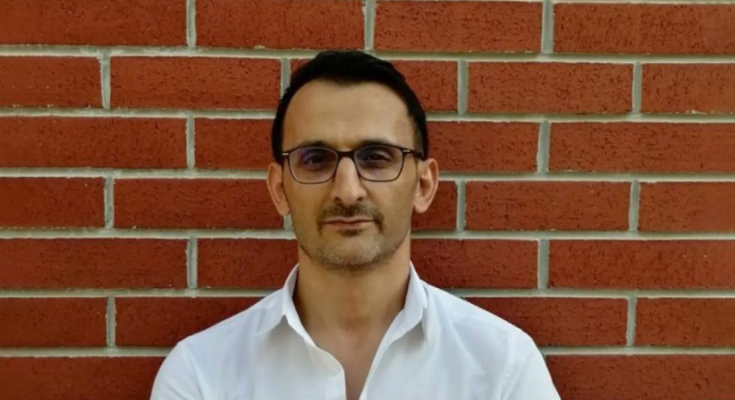
Dr. Lecturer Uğur Demir, faculty member of the Izmir Institute of Technology (IZTECH) Department of Architecture, and Prof. Dr. Alper İlki, faculty member of the Istanbul Technical University Department of Civil Engineering, increased the earthquake resistance of buildings through a method described as the “spraying method.” The project also announced that it won the “Best Project” and “Most Innovative Application” awards at the 18th International Glass Fiber Reinforced Concrete Conference.
Dr. Lecturer Uğur Demir, faculty member of the Izmir Institute of Technology (IZTECH) Department of Architecture, Prof. Dr. Alper İlki, and Fibrobeton Yapı Elemanları San. İnş. ve Tic. A.Ş. The study titled “Strengthening of Reinforced Concrete Columns Not Complying with Current Standards with Glass Fiber Reinforced Sprayed Mortar”, carried out in cooperation with and within the scope of a number of University-Industry Cooperation projects, won the “Best Project” and “Most Innovative Application” awards from the International Glass Fiber Reinforced Concrete Federation (GRCA) at the 18th International Glass Fiber Reinforced Concrete Conference.
Dr. Lecturer Uğur Demir, one of the members of the team that achieved international success, from the Department of Architecture at the Izmir Institute of Technology (IYTE), made evaluations about the ‘spraying method’ to Egedesonsöz.
Dr. Demir made the following statement regarding the details of the regulation and spraying method in structural reinforcement:
“In terms of cost, it is close to the cost of fibrous polymer wrapping. Vertical elements such as curtains and columns are important in the earthquake resistance of the building. If there are curtain walls in the building, they carry the earthquake forces to a large extent, if not, the columns carry them. Therefore, we need to strengthen the columns or curtain walls in the building. Buildings with curtain walls are generally in good condition anyway… Think of a column with a side of 30 centimeters and a side of 60 centimeters. Our regulation and many international regulations have to set limits on the reinforcement method. Because not every method works effectively in every situation. The Turkish building earthquake regulation was updated in 2018. In newly constructed buildings, engineers must comply with the provisions and rules it gives in the performance evaluation of existing structures. The regulation says that if the ratio of the long side to the short side exceeds this value, you cannot use this method in strengthening the column, I do not allow it. For example, there are fibrous polymer composite materials, like fabric, you can wrap the columns from the outside with these materials. It is an effective and also very fast method in increasing the displacement capacity. It allows you to enter and reinforce columns inside the building very quickly, sometimes even when the building is under service. But as I said, you are not allowed to use it in every situation, there are certain limitations. When you bring all of these together, there is no method you can use to reinforce every column.
We developed an alternative method. You spray glass fiber mortar with a spray gun. Glass fibers are both cheaper than other polymers and a highly sustainable material, they can also be manufactured from waste glass etc. and there are companies that do this in our country. We have an industrial partner in Düzce. A company called Fibrobeton. They use this material but for different purposes. They produce concrete facade elements of prestigious buildings in many important points both in our country and in the world. We said that this material can also be used for reinforcement. Its mechanical properties are especially good. There are researchers who use it by plastering it by hand, but it is a very problematic application in terms of application. We spray a mixture we developed on the arm using a gun system, and we enlarge the cross-sections of our column a little. We only increase it by 3-4 cm in thickness, we do not narrow the spaces, we do not disrupt their functions and it is possible to apply this very quickly. Therefore, you do not need to empty the entire building for months during the reinforcement. Moreover, this method increases both the horizontal load capacity, the displacement ability and the rigidity at the same time.”
10 BUILDINGS CAN BE STRENGTHENED WITH THE COST OF DEMOLISHING A BUILDING
Demir stated that the source of inspiration for the project was the disaster risk reduction studies conducted by the Istanbul Metropolitan Municipality and said, “Approximately 70% of the existing buildings in Istanbul were built before 2000. Of these, approximately 25 percent of the approximately 30 thousand buildings examined were found to be risky. This means that there is a possibility that hundreds of thousands of buildings in all of Istanbul will collapse or receive serious damage. Considering how many residences these contain and how many people live in one residence, it is possible to say that millions of people are at risk. We cannot demolish all of these buildings and rebuild them. We have neither the time nor the economic power for that. At best, a budget of 500 billion dollars is needed. Since it is not possible to demolish and rebuild all of the buildings with earthquake risk in Istanbul, reinforcement is necessary; we have no other alternative. With the cost of demolishing and rebuilding one building, you can sometimes reinforce 10 buildings. In this way, you can ensure life safety. We are obliged to reinforce. “We must prioritize high-risk structures and strengthen them in some way,” he said.
IMMEDIATE ACTION NEEDS TO BE TAKEN IN IZMIR
Stating that a similar study to the one in Istanbul is currently being conducted in Izmir, Demir said, “The Metropolitan Municipality conducted a study together with the Izmir Chamber of Civil Engineers. It is currently ongoing in Bayraklı and they also did it in Bornova. We see a similar situation here. Naturally, there is a very serious risk in the building stock and these should be reinforced, unfortunately there does not seem to be any other solution. According to the report of the Izmir Branch of the Chamber of Civil Engineers, approximately 75,000 buildings could collapse in a possible earthquake in Izmir. In a study conducted by DEU academics, we see that there are 27 active faults in Izmir. The bad side; the major earthquake and fault expected under the Marmara Sea in Istanbul passes through the city of Izmir. There are many faults with the potential to produce earthquakes of up to a magnitude of 7.2, which is not insignificant. The Gülbahçe fault passes right next to our university. Taking this into consideration, we need to conduct prioritization studies based on the risk status in the building stock. It is not possible to eliminate all of this risk by declaring every place in the huge building stock as an urban transformation zone or by taking other steps without prioritization. Local government, ministry, citizens and university should all do something about this. We are losing a lot of time. I think what is being done in Istanbul is a good example and can be done in Izmir as well, it has been done for a while. İYTE has always supported this process from its top management to its lowest level, and now it has the power to do it. If the task falls to us, we will do it with pleasure. It can be done easily in Izmir as well. The citizens also expect this,” he said.
PUBLIC SUPPORT IS A MUST!
Stating that the support for academic studies is insufficient, Demir said, “There are very respected research groups operating in this field at universities in Izmir. These people should be encouraged to do more research in this field. Without public support in terms of laboratories, experimental devices and manpower, we cannot find solutions to these problems in any way. I believe that a disaster research and risk reduction center should be urgently established within İYTE, especially in order to find solutions to the problems in this region. In this way, we can complete the inventory studies for Urla, Çeşme and Karaburun in the Karaburun peninsula within this center within a few years. We have this power, knowledge and experience. We can make a loss estimate and determine all the risky buildings in the region to a large extent. The Ministry, Governorship, Metropolitan Municipality and relevant district municipalities should support us in this regard. Ensuring the life safety of every citizen is the first duty of the state, this should not be forgotten.”