
Transportation
The Izmir Institute of Technology (Iztech) campus provides a natural, calm, and Sustainability in transportation is a key focus for Iztech, which promotes a sustainable environment for staff and students year-round. The campus’s central location allows easy access to essential facilities such as the library, research center, sports center, and more. This ensures convenient reach from dormitories, faculties, and the cafeteria. To further enhance sustainable transportation, Iztech is developing policies that provide various options for accessing the campus, including public buses, shuttles, e-scooters, e-vehicles, and bicycles. Current strategies related to sustainable transportation are outlined across various topics.
The total number of vehicles (cars and motorcycles) divided by total campus’ population
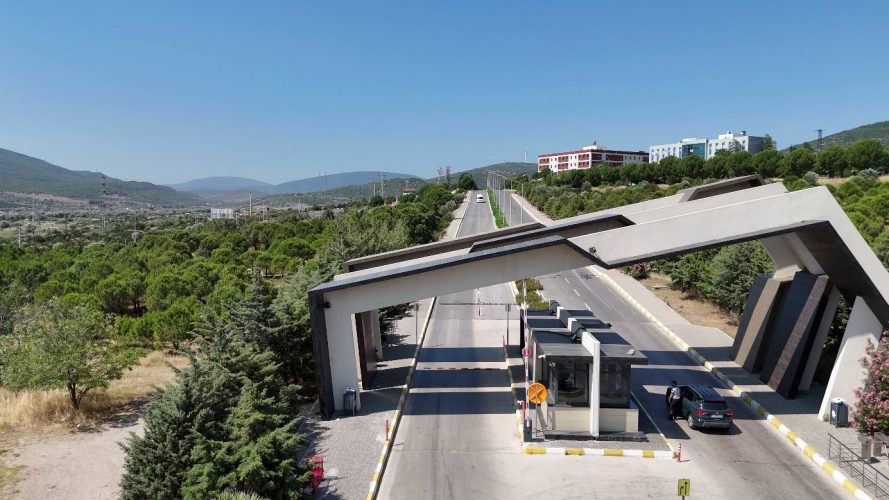
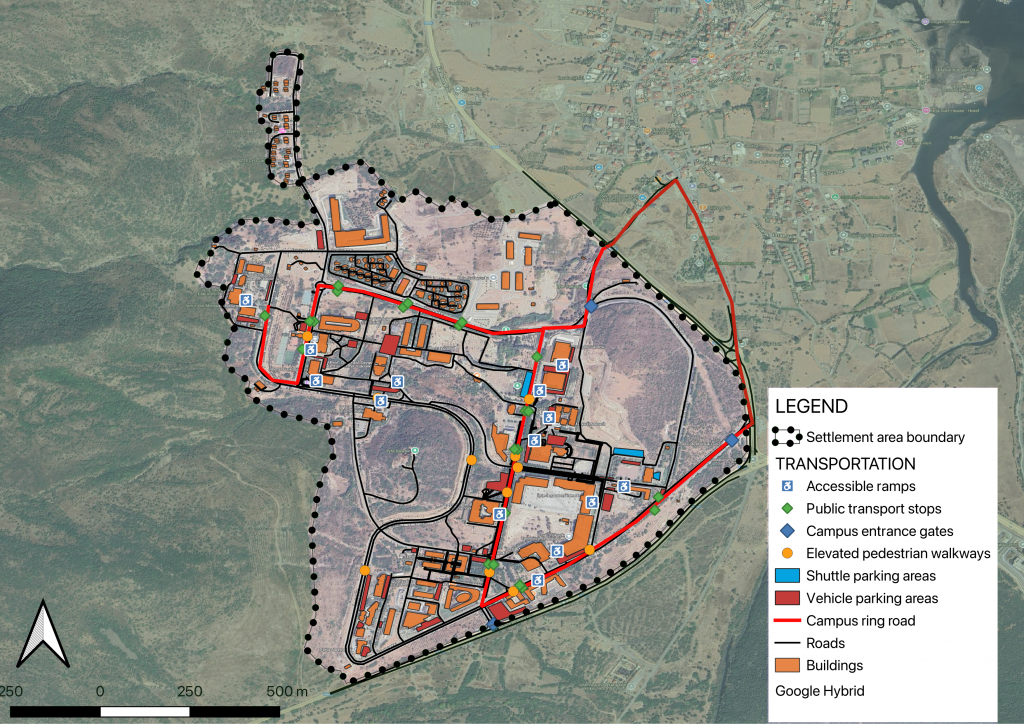
The Izmir Institute of Technology (Iztech) operates sixteen vehicles for staff mobility and educational activities, including cars, vans, minibuses, and buses. Additionally, seven vehicles are designated for tasks like sewage disposal and fire response, but they don’t count towards the total. The campus has three gates—East (Main), South (Secondary), and North (Gülbahçe Village)—all equipped with a Licence-Plate Recognition System (LPRS). Students and staff must apply for LPRS to drive onto campus, while visitors receive assistance from security personnel for entry.
Shuttle Services
The Izmir Institute of Technology (Iztech) offers a free shuttle service with hop-on, hop-off options on campus and to Gülbahçe Village, accommodating up to 50 passengers (27 seated). This service is available to staff, students, and visitors, using existing bus stops on campus. The shuttle operates late evening routes linking the central library, dormitories, and the village. Additionally, public buses from Izmir Metropolitan Municipality also serve the campus and village.
Zero Emission Vehicles (ZEV) Policy on Campus
At the Izmir Institute of Technology (Iztech), students and staff can easily access the campus by bicycle. The road network features a 30 km/h speed limit, elevated crosswalks for pedestrian safety, and dedicated bikeways and pathways. Secure bicycle parking is available in each faculty area, with around 90-110 private bicycle trips made daily. The Ministry of Health of Türkiye donated 59 bicycles for free use on campus starting in the 2025-2026 academic year, and Kumru Scooter offers 40 e-scooters for rent via a mobile app. Iztech also operates two e-bikes for agricultural and civil engineering, utilizes two minivans for routine transport, and plans to purchase an electric minibus to enhance shuttle services and cut CO2 emissions.
Ratio of Parking Area to Total Campus Area
The campus of the Izmir Institute of Technology (Iztech) is located on the western side of the Izmir metropolitan area. The total campus area is 28,140,000 m2, while the total parking area measures 27,396 m2.
Program to limit or decrease the parking area on campus for the last 3 years
The Izmir Institute of Technology (Iztech) offers shuttle services for its staff from 12 locations in the Izmir Metropolitan Area. Starting in the fall semester of 2025-2026, 24 buses will connect to the Iztech campus for students and staff. An annual protocol with a transportation company ensures these services, leading to daily transport for thousands and an over 30% reduction in private car use.
Number of Transportation Initiatives to Decrease Private Vehicles on Campus
İzmir Institute of Technology (Iztech) has four key initiatives to reduce private vehicle use on campus:
- Campus Bus Services:** Free weekday bus services are available for staff commuting from the metropolitan area, along with a shuttle that operates every 30 minutes on campus and extends to Gülbahçe Village during peak hours. A night bus service is also available for those needing to leave after 8:00 PM with online registration.
- Bicycle Sharing System:** The “Unibike” system offers 50 bicycles for a nominal charge, with additional free bicycles donated by the Ministry of Health, managed by the Iztech Cycling Community. Secured bike parking is available near faculty buildings.
- Public Transportation:** İzmir’s public transport includes three bus lines (882, 883, 982) servicing the Iztech campus, with accessible schedules through links and smartphone apps.
- Minibus Services:** Minibuses operate between İzmir city center and Gülbahçe, circulating through the Iztech campus from 06:30 AM to 11:15 PM, with departures every 20 minutes.
The IZTECH campus features a shared electric scooter system called Turla, which can be used on campus as well as in nearby Urla and Gülbahçe. Users can find, unlock, and rent scooters easily through the Turla mobile app.
Planning, implementation, monitoring and/or evaluation of all programs related to Transportation through the utilization of Information and Communication Technology (ICT)
The current use of Information and Communication Technology (ICT) in Iztech’s transportation system is in the implementation stage. The shuttles, though new and regularly maintained, do not have GPS or tracking systems. The campus monitors vehicle entries using cameras with an ICT license plate recognition system, and the data is published monthly online at https://sustainability.iyte.edu.tr/. Ongoing discussions with the administration aim to enhance ICT in transportation. The shuttle service efficiently covers all major campus buildings, dormitories, and nearby residential areas, making additional ICT for route planning unnecessary. It uses existing bus stops and follows set timetables, with schedule changes communicated via email. Service runs are reduced in summer due to low demand, and late service registration is available online. Currently, the shuttle bus lacks GPS tracking. However, tracking could improve passenger time management. The university plans to purchase a new electric bus with GPS, which would facilitate tracking and reduce emissions. If this purchase goes through in the coming year, enhanced ICT for the shuttle service may be implemented.
Impact of Transportation programs in supporting the Sustainable Development Goals (SDGs)
The university has launched various sustainable transportation initiatives that align with the 17 Sustainable Development Goals (SDGs). These efforts reflect a commitment to low-carbon mobility, reducing air pollution, and ensuring safe, inclusive, and accessible transportation. Key programs include:
- Development of integrated pedestrian pathways and dedicated bicycle lanes across campus to encourage non-motorized transport.
- Operation of low-emission campus shuttle buses, including electric or hybrid vehicles, to reduce reliance on personal cars.
- Installation of electric vehicle (EV) charging stations to support the transition to cleaner transportation alternatives.
- Designation of car-free zones and limited-access areas to minimize traffic congestion and air pollution within the campus.
- Provision of bicycle-sharing programs and supporting infrastructure (parking racks, lockers, repair stations) to enhance cycling convenience.
- Implementation of a vehicle restriction policy, including license plate control or limited parking permits for students and staff.
- Integration with public transportation systems, including campus bus terminals or last-mile shuttle services, to improve accessibility.
- Awareness campaigns and mobility education initiatives promoting safe, healthy, and sustainable transport behaviour.
- Real-time digital tracking tools to monitor shuttle schedules, optimize routes, and support user convenience.
- Collaboration with government and urban planning stakeholders to align university mobility strategies with broader city transport plans.
These efforts directly support SDGs 3, 4, 7, 9, 11, 12, 13, and 17, and contribute indirectly to others, including:
- SDG 3 – Reducing exposure to air pollution and promoting healthy, active lifestyles
- SDG 4 – Ensuring inclusive access to education through safe and reliable campus transport
- SDG 7 – Promoting the use of clean energy in transportation
- SDG 9 – Supporting innovation in sustainable transport infrastructure
- SDG 11 – Building inclusive, safe, and sustainable urban mobility systems
- SDG 12 – Encouraging responsible use of resources through shared mobility
- SDG 13 – Lowering carbon emissions through low-impact transportation
- SDG 17 – Strengthening partnerships to develop integrated, sustainable transport networks
NEWS & EVENTS
No posts found.